


When your mood has felt heavy for weeks, you will hear two phrases over and over: depression treatment and therapy. People often use the words as if they mean the same thing, but they describe different tools, with different goals, timeframes and outcomes. Knowing the difference matters, because the right choice depends on your symptoms, your preferences and how much support you already have around you.
This guide compares the main approaches side by side so you can walk into a conversation with your GP or mental health professional feeling informed and in control.
What is the difference between treatment and therapy?
Depression treatment is the broad umbrella term. It covers every approach used to relieve depression, including psychological therapy, medication, brain stimulation techniques, lifestyle changes and support programs. Therapy, or counselling, is one specific kind of treatment: a structured, talk-based process where you work with a trained professional to understand and change how you think, feel and behave.
So the real comparison is not treatment versus therapy in a strict sense. It is medical and biological treatments, such as antidepressant medication and transcranial magnetic stimulation, against psychological therapy, such as cognitive behavioural therapy and interpersonal therapy. Both are valid forms of treatment; they simply act on the problem from very different angles.
How each approach works
Psychological therapy works from the inside out
Therapy helps you make sense of what is driving your low mood. In cognitive behavioural therapy, you learn to notice unhelpful thought patterns and test them against reality. You build practical coping skills, process difficult emotions and gradually re-engage with the activities that give life meaning. Progress depends heavily on the relationship with your therapist and on the work you do between sessions.

Talk therapy helps you build coping skills and process difficult emotions.
Medical treatment works from the outside in
Biological treatments target the brain directly. Antidepressant medication adjusts the balance of chemical messengers involved in mood regulation. Transcranial magnetic stimulation, which is delivered while you sit comfortably with no anaesthesia, uses magnetic pulses to gently stimulate nerve cells in the areas of the brain linked to depression.
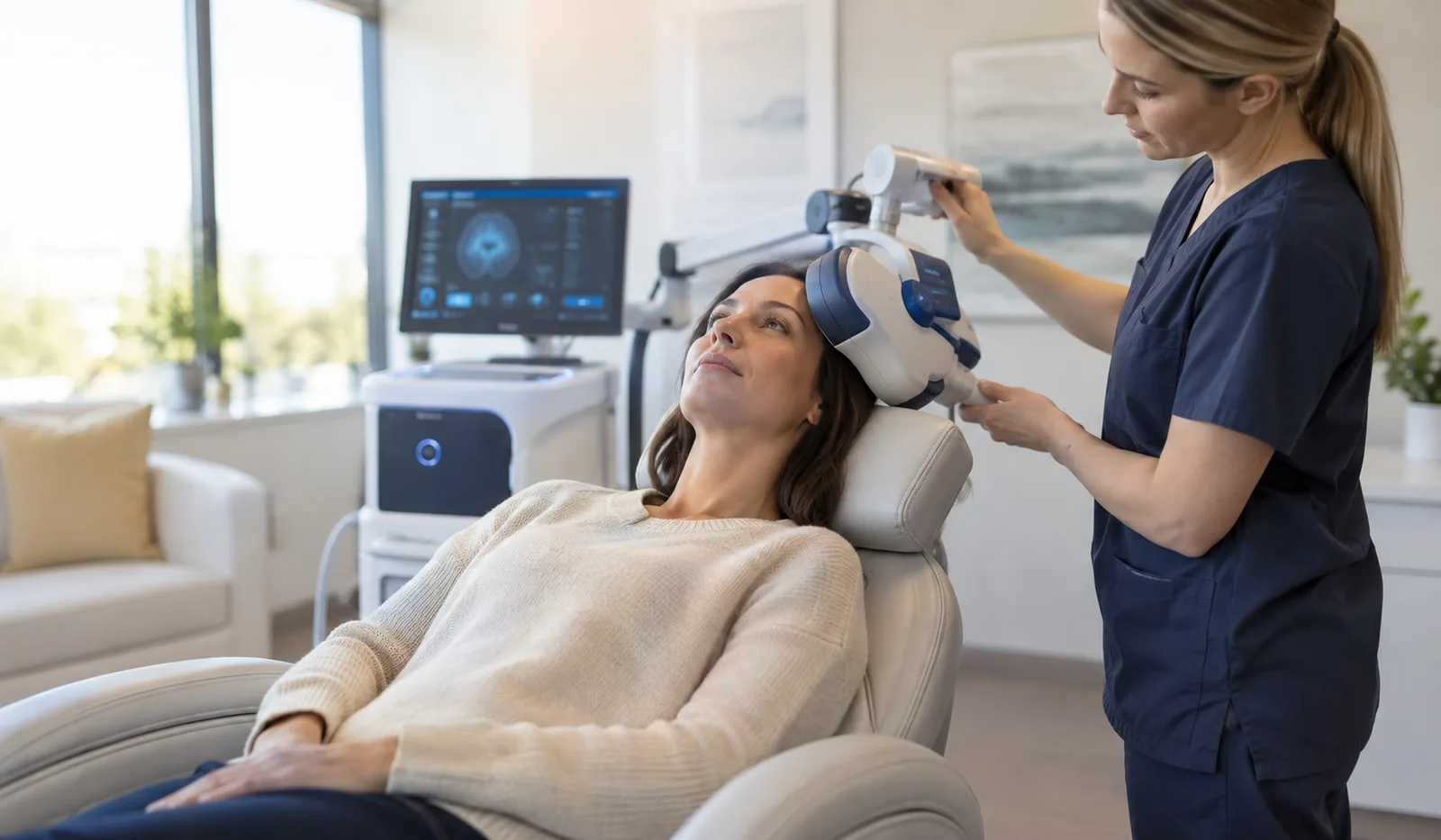
Transcranial magnetic stimulation is delivered while you sit comfortably, with no anaesthesia.
These approaches do not require you to talk through painful memories, which can be a relief when low mood has left you exhausted or withdrawn.
Time to results and level of commitment
Therapy is a journey. A typical course runs for at least several weeks, often longer, with regular appointments and honest self-reflection in between. Many people notice real change within a few months, but it takes patience and consistency.
Medication also takes time, usually a few weeks before you feel the full effect, and it needs to be taken daily. Brain stimulation sits somewhere in between. A course of TMS is structured and time-limited, with sessions scheduled regularly over a number of weeks, and many people find the routine easier to commit to than daily medication.
Side effects and safety
Every approach has trade-offs. Antidepressants can cause side effects such as nausea, sleep changes or weight gain, particularly in the first few weeks, and some people need to try more than one option. Therapy has almost no physical side effects, but it can be emotionally intense, and it only works if you feel safe and comfortable with your therapist.
Brain stimulation is non-invasive and generally well tolerated, with the most common effects being mild scalp discomfort or a headache after a session. Because it does not circulate drugs through the body, it can suit people who have not responded well to medication or who want to avoid its side effects.
Who is each option best for?
- Therapy suits mild to moderate depression, a preference for non-medication approaches, or the goal of building long-term coping skills.
- Medication is often recommended for moderate to severe depression or when symptoms interfere with daily functioning.
- TMS is typically considered when someone has not responded to therapy or medication, or wants an alternative to tablets.
- Many people find the strongest results by combining approaches rather than choosing one.
Which should you choose?
There is no single right answer, and you do not have to decide alone. A good first step is a thorough assessment with your GP or a psychiatrist, who can help you weigh up severity, history and personal preference. For mild symptoms, therapy might be all you need. For moderate or severe depression, combining psychological therapy with a medical approach is often the most effective path.
If you are considering a non-drug option, brain stimulation deserves a conversation. At Neuralia TMS in Moonee Ponds, the team offers TMS and transcranial direct current stimulation, and can talk through whether they might suit your situation. You can read more about how these advanced Depression Treatment services are expanding across Perth.
Whichever path you take, remember that depression is treatable and that reaching out is a sign of strength, not weakness. For more information on your options, Beyond Blue and the Black Dog Institute offer free, reliable guidance, and the World Health Organization provides a helpful overview of depression and its treatment. You deserve to feel like yourself again.